- 7300 Broadway Denver, CO 80221
-
Monday – Friday: 7:00AM – 6:00PM | SAT: 8:00AM – 5:00PM | SUN: Closed
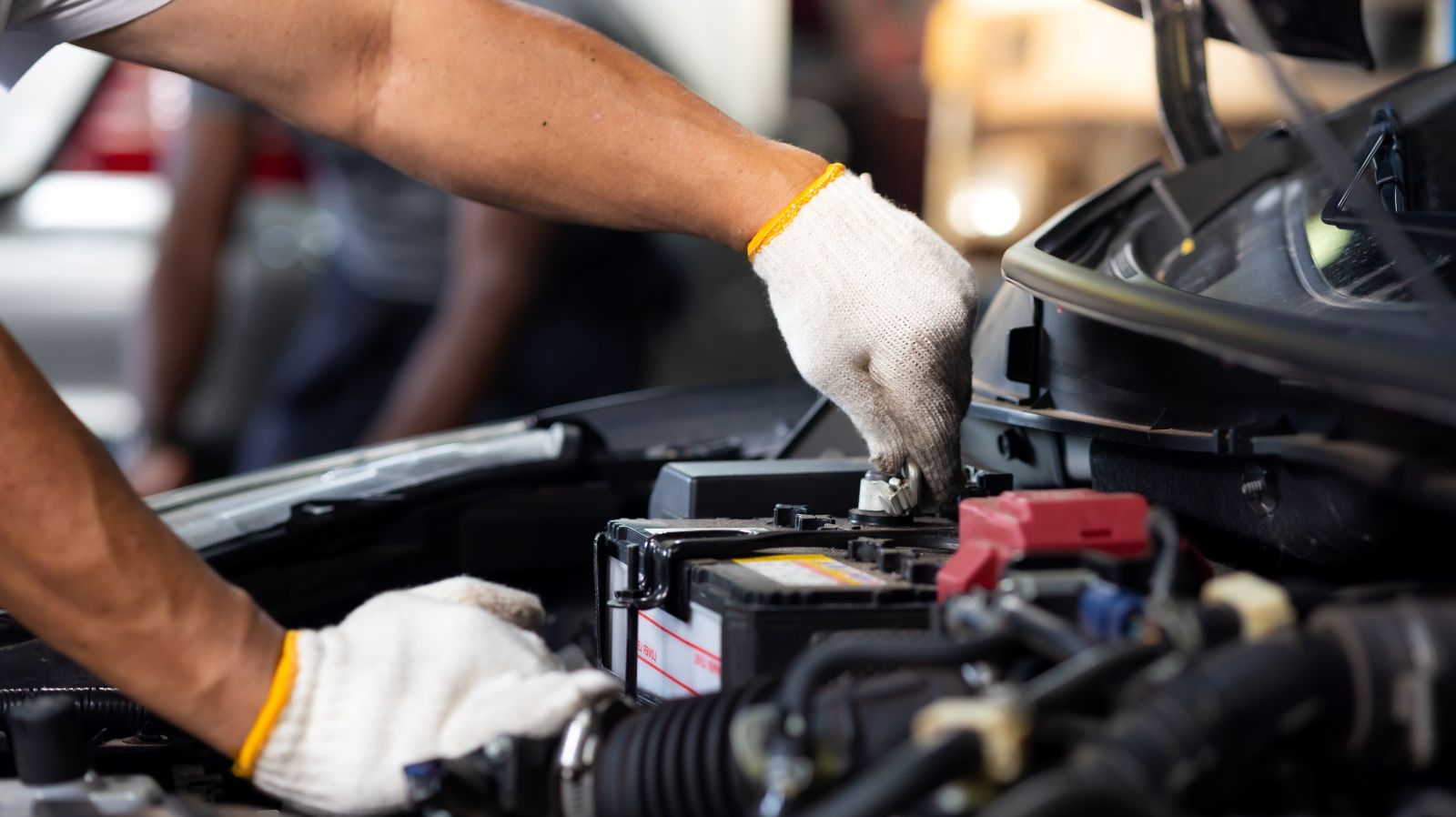
You haven’t driven your Hyundai in a few days, and when you try to start it, you get a click, or a slow crank that doesn’t start the engine.
The cause can be the Hyundai battery itself, the connections to it, or the charging system that keeps it charged, and each one needs a different fix. A jump start gets you moving, but it doesn’t tell you which one you have.
A weak Hyundai battery can show up as slow engine cranking, dim headlights, clicking when you try to start the car, warning lights, or electrical glitches. On models with a start-stop system, that system may also quit shutting the engine off when the battery is weak. A battery test confirms it.
The 12V battery starts the engine and powers the electronics. Your key fob has its own battery, which is a separate fix.
Look at the battery connections. The cables should be secured, clean, and free of corrosion.
Where the battery sits depends on the model, so use your owner’s manual to find it. If the connections look fine and the car still clicks or cranks slowly, the battery needs a test.
A jump start gets the engine running. If the car doesn’t start after a few attempts, it probably needs service, and if you don’t know why the battery went dead, have us inspect it.
The steps differ by model, so follow the jump-start steps in your owner’s manual. Afterward, keep the engine running for at least 30 minutes on some models, and up to 60 minutes if the battery was completely discharged. Don’t try to push-start the car.
The same dead battery can come from three different problems, and each one has a different next step.
| What you notice | What it can suggest | Best next step |
|---|---|---|
| The engine cranks slowly, the headlights look dim, you hear clicking, or start-stop no longer shuts the engine off at stops. | A weak battery. On models with start-stop, the system may not operate when the battery is weak. | Have the battery tested. |
| There is buildup on the battery terminals, or a cable clamp moves when you push it. | Poor contact at the connections. | Have the connections cleaned and tightened, and have the battery tested if the car still won’t start. |
| The battery goes dead again after a jump start, or you can’t tell why it went dead. | The cause isn’t clear, and a drain or the charging system may be involved. | Don’t keep jumping it. Schedule an inspection. |
| The charging system warning light comes on while you’re driving. | A fault in the charging system that keeps the battery charged. | Stop in a safe place, turn the engine off, and call us or roadside assistance. |
No. That light points to the alternator or the electrical charging system. Drive carefully to the nearest safe place, stop, and turn the engine off, then call us or roadside assistance for a tow.
Most Hyundai batteries last 3 to 5 years, depending on weather, driving habits, and how much electrical equipment you use. Many drivers replace theirs around year 4, or sooner if a test shows it weakening. Testing is generally recommended at least twice a year, especially before extreme summer or winter temperatures.
The National Weather Service’s 1991 to 2020 averages put Denver at 156 days a year with a low at or below freezing, so a test before winter is a good habit. A battery also drains while the car sits, so ask us about the best way to keep it charged before you park the car for a few weeks.
Our Hyundai-certified technicians use computerized testing equipment to measure the battery’s condition under load while checking the alternator’s output and the charging system. A battery test typically includes a load test, a voltage check, and a charging system inspection.
If you need a Hyundai battery replacement, we can help determine the correct type for your car. A Hyundai with start-stop needs the battery type it was built for, and the start-stop system may not work right away after a replacement. More detail is on our battery testing and replacement page.