- 7300 Broadway Denver, CO 80221
-
Monday – Friday: 7:00AM – 6:00PM | SAT: 8:00AM – 5:00PM | SUN: Closed
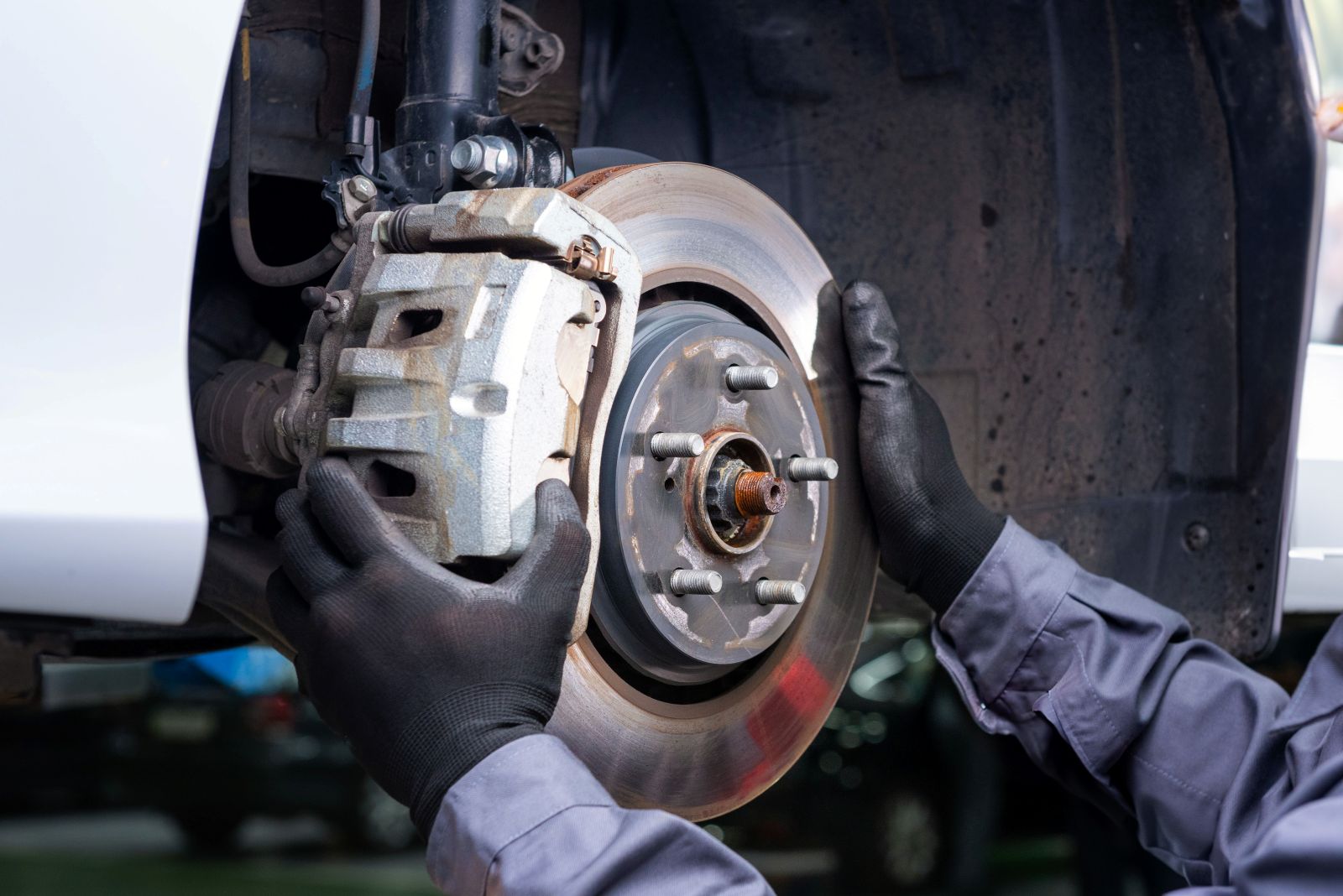
You stop at a red light, and your Hyundai lets out a high-pitched squeal. It quiets down when you pull away, so you tell yourself it can wait.
That squeal can mean the Hyundai brake pads are worn, or it can be harmless, and the difference depends on how often you hear it and what else you notice.
When Hyundai brake pads are worn, you’ll hear a high-pitched sound from the front or rear brakes. It can come and go, or happen every time you press the pedal. Other signs are grinding, a vibration every time you brake, a longer stopping distance, or a soft pedal.
Some brake noise is harmless. A brief sound in certain weather or driving conditions can pass on its own, but a squeal that keeps coming back is worth having checked.
Brake pads on a Hyundai typically last 35,000 to 70,000 miles, depending on your driving habits, road conditions, and traffic. Stop-and-go driving usually wears them faster.
Hyundai’s maintenance schedule has the brake pads and rotors (the metal discs the pads squeeze) inspected at every service interval, which is every 8,000 miles or 12 months on recent models. The schedule calls for inspecting them more often if you drive on salt-spread roads, in very cold weather, on mountain roads, or in a lot of stop-and-go traffic, or if you tow. At least two of those fit Denver driving. The Colorado Department of Transportation (CDOT) treats Denver-area highways with salt-based deicers, including magnesium chloride, and mountain roads count too.
How soon to act depends on what you notice.
| What you notice | What it can suggest | Best next step |
|---|---|---|
| A high-pitched squeal that comes and goes or happens every time you brake, or a vibration every time you brake. | Worn pads. A vibration can also come from worn or uneven brake parts. | Schedule a brake inspection soon. |
| Grinding, or the car takes longer to stop. | The pads may be worn down too far, which can damage the rotors. | Have the brakes inspected right away. |
| The brake pedal feels soft, or a brake warning light stays on. | A problem in the brake system, such as low brake fluid. | Stop driving when it’s safe and call us or roadside assistance. |
No. Worn pads reduce your stopping power, and driving on them can damage the rotors, which makes the repair bigger. Your owner’s manual says not to continue driving with worn brake pads.
If the pedal feels soft, or a brake warning light stays on after you’ve checked that the parking brake is fully released, treat it as an emergency. Drive carefully to the nearest safe place and stop. If the light stays on, you see a leak, or the brakes don’t feel right, don’t drive the car. Call us or roadside assistance for a tow.
Brake noise or abnormal tire wear can show up after you drive on roads with deicing chemicals. Your owner’s manual says that when traffic is safe, you can apply the brakes a bit more than usual to clear the chemicals off the rotors and pads. CDOT also recommends washing deicer residue off your vehicle with soap and water after a storm.
On a long, steep descent, shift to a lower gear so you aren’t braking constantly. Braking nonstop overheats the brakes and can cause a temporary loss of braking performance, and your owner’s manual explains how to downshift on your model. Don’t rest your foot on the brake pedal while you drive either, because that wears the pads faster and raises brake temperatures.
After you drive through deep water, the brakes can feel weaker or pull to one side, so test them lightly. To dry them out, tap the pedal lightly while you drive at a safe speed until braking feels normal, and avoid high speeds until it does.
Our Hyundai-certified technicians use factory-recommended parts and diagnostic equipment to inspect the pads, rotors, brake fluid, and related parts. A full brake service also checks for uneven wear, lubricates moving parts, and tests braking performance afterward. Pads are replaced as a full set on an axle, left and right together. Checking the whole system matters because routine inspections can catch worn pads, rotor wear, and other issues before they lead to larger repairs.
More detail is on our brake pads and rotors page.